

prolix
-
Posts
171 -
Joined
-
Days Won
8
Posts posted by prolix
-
-
I feel like some of this was touched on in the last podcast...
http://cdn.freedomainradio.com/FDR_2976_Call_In_Show_16_May_2015.mp3
-
 1
1
-
-
Or not...
-
Is judgement different than criticism? I will argue yes, and it is a significant difference.
You make judgements on things that are actionable. If you plan to act it is a judgement like a judge sentences someone to do xyz. Or you make a "judgement call" on what shower curtain to buy or something. Judgement is for things because since it is actionable, there will be things involved in that action.
You make criticisms on ideas that are not necessarily actionable. If you challenge an idea it is a criticism like rejecting the methodology of the state. Or you "give criticism" on someones song or some concept oriented endeavor. Criticism is for ideas. Because since an idea is nonmaterial all you can do is criticize it.
When you make judgements on people and ideas, then, you are treating people as things. You would be dehumanizing others; Ex. Judge throws you in jail for nonviolent crime.
When you receive criticism and you recoil in anguish you are treating criticisms like a judgement. You are dehumanizing yourself; Ex. Someone tells you your song sucks and you quit music forever.
-
1
-
-
I don't think is even remotely comparable to frozen.
Frozen is a childrens animated musical with cute snowmen and characters
This is a film that masks itself as historical when in reality its completely false and portrays a violent murderer as a hero to society. The main character in the film wrote the autobiography himself and there is a lot to be said about him as mentioned above. Further, the movie makes the war seem just, it makes his actions seem just, or at least that is the goal. I know stef breifly discussed this, but I just have no idea why these facts and circumstances surrounding this movie were omitted in his review. If we are going to do a "truth about Ghandi or MLK, why not do a truth about this guy when discussing the film and doing a "philosophical review"
I'm highly disappointed and feel like the show is starting to sell out in order to grow or avoid damage.
I feel like you want a "Truth About Ryan Kyle" video. And you thought you were going to get that in a "Truth about American Sniper Movie". I would like to see that too. but I would not expect it from a movie review...
-
1
-
 1
1
-
-
Yea. for sure. Turn the mike dial up indeed! One of the best shows ever!!!!
-
2
-
1
-
-
as a Christian!
In one of the recent call in shows Stef made me feel much more safe being a Christian in a heavily atheist community (I know, how ironic). But yeah. I'm one of them Jesus freaks. Just thought I'd let y'all know.
What was it about that show, what particular concept, made you decide to come out of the closet on this?
And I am curious, was it that you were unsure in general about your Christianity, and the podcast made you more comfortable being a christian in general. Or was it, as you said, that you were much more comfortable being a Christian in this community, safe as you put it, but you have always been comfortable being a Christian? Furthermore, have you ever had a lapse in faith in the past?
-
Respect actually, etymologically speaking, means to re look at, or to look at again. Its most similar synonym is recognize. So if you are revisiting an idea, you are respecting it. Certainly there is a portion of the word that means to "not judge" or to not scrutinize. You can't throw out the baby with the bathwater. That particular usage has not totallty eclipsed the broader, and I'd argue useful, meaning of the word. Yes, abusive people will utilize a perversion of "respect" to get you to not re-look-at their claims. but theat is literally the exact opposite of the correct usage of the word. Which is what abusers do, they pervert otherwise good things. Guidance for children becomes punishment. Respect becomes obedience, sex becomes rape.
but you wouldn't say that all sex is rape and thus sex is useless. Or all parenting is punishment thus having kids is useless. Is this making any kind of sense to anyone?
-
3
-
-
There has to be rational christians out there. I have just never seen it. but really, what I wouldn't give to meet just one christian who is capable of a rational conversation. Either in the media or on the street ever christian I have ever talked to becomes a hostile or a sophist or a science-denier or a flat out liar after just a tiny bit of inquiry.
They have to exist. Like stef said recently, they are mostly nice people, and that is all well and good. but they just can't have a rational conversation on the subject. I guess that inability is why they are a christian in the first place. My heart really goes out to them and I feel really bad for them. But I guess it is what they feel they need. It just stings because they convey that they have just not thought rationally about this, and if they could do that one thing, then, they could make an informed decision...
-
The human nature argument. Simply put the human nature argument is a myth. If there are some absolutes about humans it is that we are dynamic and adaptable. This is modern science. If you raise a kid to be a monster then he will be a monster. And the opposite is also true.
http://www.cato-unbound.org/2014/03/12/arnold-kling/human-nature-vs-libertarian-ideals
One year ago, Michael Huemer challenged readers with the Problem of Authority. He wrote,
what gives the government the right to behave in ways that would be wrong for any non-governmental agent? And why should the rest of us obey the government’s commands?In other words, why are government officials entitled to rule, and why are citizens obligated to obey? This is a fundamental question in political philosophy.
In this month’s lead essay, Mark Weiner criticizes libertarians for wanting to strip government officials of their right to rule and to release citizens from their obligation to obey. According to Weiner, if such wishes were granted, then the ultimate result would be a loss of the individual freedom and autonomy that libertarians cherish.
Behind any political philosophy, you will find, at least implicitly, a theory of human nature. For example, Thomas Hobbes evidently saw mankind as competitive and violent, which meant that without government there would be a “war of all against all.”
In contrast, Huemer sees humans as sufficiently rational to recognize the futility of initiating violence. Elsewhere, I have described what I see as problems and inconsistencies in Huemer’s treatment of human nature.
For me, a key issue in human nature concerns cooperation and trust. Our economic and social systems cannot function without trust and cooperation. Often, it is in our self-interest to “defect” rather than to cooperate. Yet we have the ability to cooperate to a greater degree than if we were solely acting out of individual self-interest.
On the other hand, we do not seem capable of universal brotherhood. Instead, our ability to trust and cooperate with strangers seems to be an extension of a more natural inclination to trust and cooperate with people with whom we feel kinship. It appears that humans are most inclined to cooperate in small groups, in which everyone knows everyone else and repeated interactions are likely. The tribe strikes me as the social unit under which we are most naturally inclined to interact on the basis of trust and cooperation.
Under skilled leadership, this tribal cooperation instinct can be harnessed to encompass larger social institutions, including religion, business, and political action. These larger social structures are held together by several forms of emotional glue. Our membership in these units is a precious part of our sense of identity, which we fear losing, just as a primitive member of a tribe fears expulsion into the wilderness. Our social units develop rituals, which we come to love and to consider important. They reward loyalty in both tangible and intangible ways that help bind us to the larger group.
However, in order to harness our tribal nature on behalf of large organizations, it seems necessary to have an enemy as part of the motivational structure. We demonize our opponents, attributing to them evil motives and repugnant qualities that they do not objectively possess. Red Sox fans demonize Yankee fans. Religions demonize unbelievers. Corporations demonize their competitors. Even within a corporation, it is not uncommon for animosities to flourish between, say, engineering and marketing. Certainly, political partisans demonize their opponents.
The universal phenomenon of demonization leads me to hypothesize that it is important for group solidarity. Only if there are villains to contend with will we be willing to treat some members of our tribe as heroes and to grant them the sort of authority that enables them to maneuver large masses of people.
Suppose that we take it as given that humans as social animals are tribal. If part of the glue that binds groups together is their hostility toward other groups, how can order be achieved?
In their book Violence and Social Orders, Douglass North, Barry Weingast, and John Wallis say that the most basic way to create order is for groups to form a ruling coalition that extracts rents from the rest of the population. The key is to allocate sufficient advantages to each group within the coalition so that they would rather remain in the coalition as peaceful members than defect from the coalition and engage in violence. They call this sort of polity the “natural state.”
North, Weingast, and Wallis use the term limited-access order as a synonym for this natural state. Only members of the ruling coalition have access to political and economic power. Equilibrium is maintained by differentiating the privileges enjoyed by the ruling coalition from the more circumscribed possibilities given to everyone else. Natural states do not tolerate a vibrant civil society, because any organized activity that is not controlled by the governing coalition represents a competitive threat to that coalition.
In some countries, notably the Western democracies, limited-access orders have evolved into what North, Weingast, and Wallis call open-access orders. Opportunities for economic and political power have gradually been extended to formerly underprivileged groups within the population. At the same time, the rule of law has come to apply to those holding political power.
Libertarians prefer open-access orders to limited-access orders. However, both types of state have tended to evolve to be much more powerful and intrusive than libertarians believe is proper. Is there an alternative, in which there is not a strong central state inclined to undertake a vast array of functions?
Mark Weiner says that there is an alternative, decentralized form of social order: the rule of the clan. However, this order is characterized by tight social control. Group honor is supremely important, while individual autonomy is threatening. Group norms are rigid, and conformity is required.
For Weiner, rule of the clan is the natural state. Even the limited-access orders described by North, Weingast, and Wallis represent not much more than an advanced form of clan-based rule. According to Weiner, only when the state achieves a high level of power and legitimacy can it rid a society of the vestiges of clannism.
Implicit in Weiner’s thesis is a presumption that humans naturally want the services that are provided by clan leaders or by large, modern states. What do clan societies and modern states have in common? Both seek to provide physical security. Both offer mechanisms for fair resolution of disputes. Both offer help to individuals when adversity strikes.
Weiner claims that in the absence of a strong state, those of us in modern democracies would fall back on the rule of the clan. In contrast, James Bennett and Michael Lotus in their book America 3.0, claim that there is an important cultural-historical difference between our society and clan-based societies. They argue that for nearly 1500 years, the Anglo-Saxon people have developed a culture centered on the absolute nuclear family. They write,
Its features include: (1) adult children choose their own spouses, without arranged marriages, (2) adult children leave their parents’ home to form a new, independent family in a new home, (3) the parents do not have a duty to leave their property to any child, and they may sell it during their lives or leave it by will to anyone they choose, (4) children have no duty to provide for their parents, and (5) extended families are weak and have no control over personal decisions… the underlying Anglo-American family type was the foundation for all of the institutions, laws, and cultural practices that gave rise to our freedom and prosperity over the centuries.This social pattern creates a different mentality than the collective-ownership, extended-family culture of clan societies. Most important, the absolute nuclear family requires strong property rights, so that new families can establish themselves on an independent basis.
Thus, for Bennett and Lotus, it is the strong central state that runs contrary to our nature. What Weiner sees as a necessity for individual freedom, they see as a temporary aberration resulting from the extreme capital-intensity of mid-twentieth-century production and warfare. Going forward, as the economy comes to be dominated by intangible sources of wealth, notably human capital, the role of large, centralized institutions, both private and public, will diminish.
I believe that there is evidence to support the claim by Bennett and Lotus that in the future the United States is likely to experience a radical decentralization of power. I recently looked at the list compiled by the Fraser Institute that ranks countries in terms of economic freedom. It is striking how many countries near the top of the list, such as Singapore and Switzerland, are small in terms of population. Conversely, it is apparent that most countries with large populations are not near the top of the list. The same conclusions are apparent looking at the United Nations’ Human Development Index, which starts from a very different ideological perspective. As I read the data, good government is more likely to be found in countries with small populations than in countries with large populations.
I believe that we do not face the false choice between a multi-trillion-dollar central government that recognizes no boundaries on what it attempts to control on the one hand, or a primitive clan-based society on the other. Libertarians should remind Americans that the security and social insurance that people want can be provided by much smaller-scale institutions, both private and governmental. If we want to avoid political structures that degenerate into Mafiosi, then we should radically shrink, not grow, the government in Washington.
-
Respect means that ideas are protected from skepticism in the manner you mention about respecting authority
It can mean that. but that is not the totality of the definition and the practical use of the word. You got a case of "baby out with the bathwater" here guy...
-
2
-
-
I'm saying that the very concept of respect is bullshit when it comes to ideas, respecting people makes sense but ideas deserve absolutelly no respect. Ideas either work or don't, and even if they do work having respect for them is useless.
If you are even checking to see if an idea is valid or not then you are showing it "respect". Maybe it just comes down to semantics then. But if you are disrespecting valid ideas and empirical based arguments then you are doing something that is not useful. I, personally, from what I know about the "idea" or concept of respect, find it very useful in a wide variety of situations. I guess it comes down to, "what do you mean by respect". What does "respect" look like to you? How does it manifest? Certainly one could use respect to support invalid ideas, IE; "you should respect the xyz authority regardless of the validity of their ideas". Certainly. But also simply recognizing validity and virtue can fall under the umbrella of respect. so, given the broad definition of the word it is much like any tool or state of consciousness, it can be both useful and harmful. You can use a fork to eat, or you can use it to jab your eyes out.
These are just my ideas on the topic, you may say that you give them no respect. But if you read them and consider these ideas, you have given them a certain level of respect. If you choose to respond to them, then you have added to that level of respect. Even if it is minimal...
-
2
-
-
Religions deserve no respect, political views deserve no respect, opinions deserve no respect, ideas not based in reality are bullshit.
Ideas based on reality also deserve no respect. The truth needs not to be respected because ignoring the truth is insanity.
I got no respect for this post then...
-
The trick is to see the big picture. The biggest picture you can. Then the details kinda fall into place. Otherwise you are dealing with a lot of memorization and complex mental organization. I think this is what "first principles" is really about; what are the primary truths of a situation? Then from there you can fit in all the little examples and supporting pieces...
-
3
-
-
So what other movies have had as many pro-AnCap themes as this one in the past? That Ayn Rand Atlas Shrugged movie maybe. I can't think of many others....
-
Looks like you got a well thought out reply in response to your, sorry, very short generalizations. So what exactly are you asking of the community here? The reply doesn't look like it is overtly feminist as much as it is going into more depth and counterpointing the points and themes you brought up in your short original statement. It would be helpful to tag a little bit at the end about why this is interesting to you to give us a starting point. Do you want us to refute this "Feminist" talking points? Or something else? I just think it would be helpful to tell us a little bit about your thoughts and feelings about this exchange? Do you have opposing views and/or facts concerning these topics? What are they?
-
2
-
-
I would give it to them "Ok, I may be remembering it wrong". But the new situation that you may be remembering another situation wrong is also significant. What you specifically remember is kinda secondary to how you feel. So you could say "I may have mis-remembered the situation but I still feel badly about it and I still am uncomfortable with our current relationship and if I mis-remember the situation then I am doing that for a reason".
But really, if you are attempting to have an honest relationship with someone it does not really matter what device they use to invalidate you and resist you. The point of interest is that they are resisting and invalidating your attempts at an honest conversation...
-
Yea, so you have outlined the few instances where the current statist "law" is in line with NAP and a free society. That happens. The state parallels a free society in many ways. The point is where they differ. Where they differ is also significant. So you listed 5 parallels. But you can not say that invalidates the 100000's of instances where state power via "law" is just an opinion with a gun. You have listed the few instances where almost any society would hold these "anti-xyz" universals. UPB is a free book and is a good outline on why/how that is an objective reality. But the gross majority of "laws" are just opinions of a gun. So you highlight that how the state deals with these thing is also not ideal. Well, that invalidates your premise also. In a free society someone proven guilty of these crimes you list will be dealt with without an "opinion with a gun". Meaning that "anti murder is not an opinion with a gun" yes. But how you deal with a murderer is a matter of opinion with a gun in the current statist system.
So it seems a little nit-picky to me. I mean, if I say "Chinese people are short", then you say "what about this one tall Chinese guy", you have not invalidated the generality I am highlighting. You are just saying that I should have stressed the fact that it is a generality. That is nit-picky. Same thing here. Stefan wrote a book called UPB that outlines the universality of these situations you bring up. So this isn't exactly new thought on the topic.
Also it reminds me of the "state doesn't provide xyz, then xyz will not get done" logical fail scenario. Yes, the state is on board with certain aspects of UPB and NAP, but this is in no way able to validate the immoral foundation of the state or the massive majority of the state functions that are in face "an opinion with a gun". So, I really feel the need to be harsh on you about this given your last sentence is a little insulting and reads like a bitchy snark comment I would expect from mainstream news editorial...
-
3
-
-
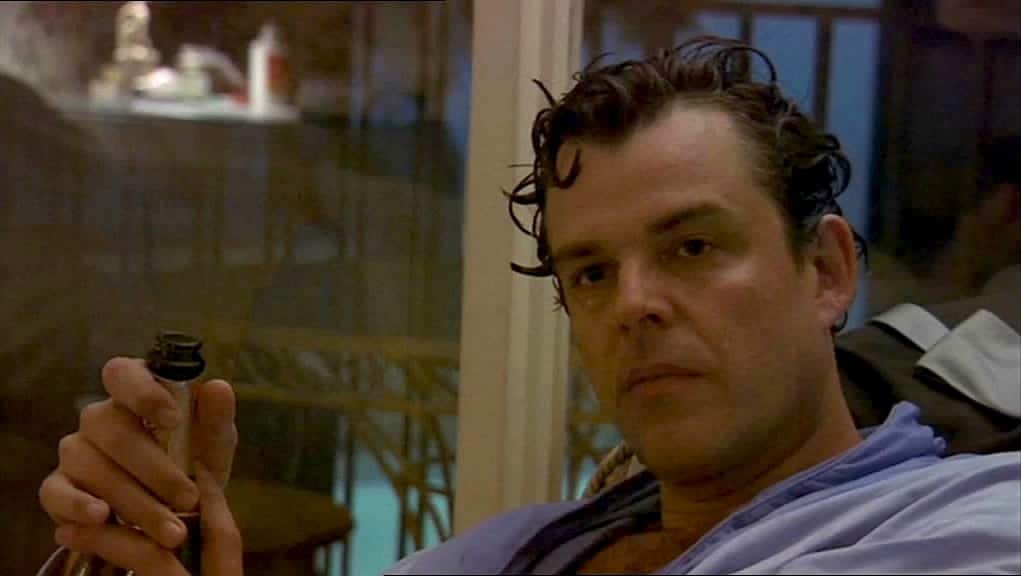
Danny Huston
-
So your method of negotiation is to routinely terrorize me by trashing my reputation, down voting every post I make because you're upset, and being an all around shit head on my threads? I've noticed that other posts I have made which have nothing to do with you or this thread have also been down voted, seemingly without reason. Are you actually searching out my other posts and down voting them?
Dude, this is cyberbullying. You were trolling. I called you out on it, I asked you politely to stop. You didn't. I ordered you to stop, else this would go to a Mod and you've stepped up your game. Shit just got real bro. You are not helpful on these boards and are blatantly trolling.
Moderators, why is this guy still on the boards? He clearly has no interest in rational discourse and has all but admitted to trolling. This is not the only thread where his actions have been disruptive.
- Please avoid accusing someone of bad intentions without any evidence. “Oh, so whenever you are wrong, you just run away!” “Oh, you're just changing the topic because you can't handle the truth!” Even if it turns out to be true, this kind of hostility will never bring enlightenment.
https://board.freedomainradio.com/index.php?app=forums&module=extras§ion=boardrules
-
1
-
1
-
So your method of negotiation is to routinely terrorize me by trashing my reputation, down voting every post I make because you're upset, and being an all around shit head on my threads? I've noticed that other posts I have made which have nothing to do with you or this thread have also been down voted, seemingly without reason. Are you actually searching out my other posts and down voting them?
Dude, this is cyberbullying. You were trolling. I called you out on it, I asked you politely to stop. You didn't. I ordered you to stop, else this would go to a Mod and you've stepped up your game. Shit just got real bro. You are not helpful on these boards and are blatantly trolling.
Moderators, why is this guy still on the boards? He clearly has no interest in rational discourse and has all but admitted to trolling. This is not the only thread where his actions have been disruptive.
Yea, that is not what happened. I am not trolling. I had a concern about "the race card" aspect early on, a concern that you only recently developed later in the thread. You resisted my early concern and gave me a huge load of grief about it.
Can you try to re-read the exchange without the bias that I am antagonizing or being rude? I asked a simple question, that later on in the thread you even addressed, and then you totally took it the wrong way despite me urging you not to. Look at your first response to me and my original question. "How is race relevant?" You totally assumed I was calling you a racist and characterizing your actions as horrible.
Then later you admit that race was not really relevant, but you managed to give me a load of grief in the meantime and casting me as the troll for asking about the relevancy and giving possibilities of alternative relevancies. I wasn't even saying that race WAS irrelevant. I was asking how it could be or could not be relevant, just asking. You assumed that my position is that it was irrelevant, again, an assumption that had nothing to do with my intentions. I simply wanted you to speak to me like I am a real human being. Then when I point that out, just double down and start telling me what to do again and making more assumptions and telling the mods what to do. It is really quite confusing for me...
-
1
-
1
-
-
And Prolix, stop down voting all my posts. You're trashing my reputation for no reason and its childish.
Still waiting for that apology...
-
1
-
1
-
-

Could you be more specific?
-
1
-
1
-
-
Yup. And I just did the research. All the articles that are pro-spanking are either editorial pieces with no science source. Or one "study" conducted by a christian liberal arts professor at a christian college. Literally 100's of studies and articles can be found against spanking...
-
2
-
-
. I suppose in the long run, it doesn't matter if they throw the race card around.
Well then i guess you owe me an apology for when I was asking why it would matter, you kinda gave me a great big pile of shit...
-
1
-
4
-
IQ test
in Miscellaneous
Posted
140, this thing is broken...